
Consent Mode v2 for Education: Fix Under-Reported Google Ads
Excerpt If families decline cookies, Google Ads may never see the enquiries your campaigns drive. What Consent Mode v2 is, how to check yours, and how we fixed it for ProEd.
Ashif Abbas

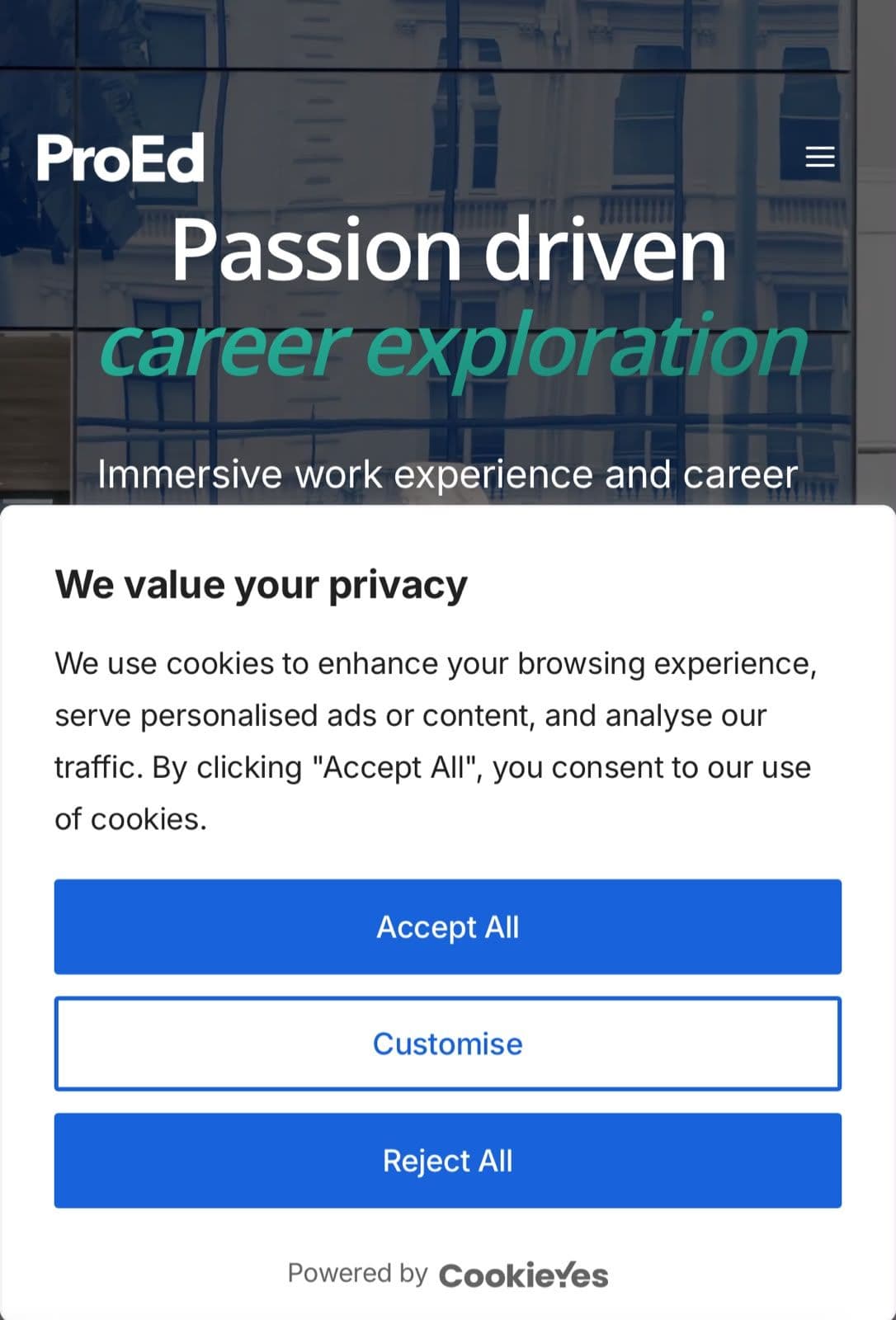
If your Google Ads say a campaign isn't producing enrolments, it might be true. Or Google might simply not be seeing them. When a visitor declines cookies on a site without Consent Mode v2, their enquiry can vanish from your ad reporting entirely.
This guide explains what Consent Mode v2 is, how to check your own setup in five steps, and how we fixed under-reported conversions for an education provider.
What is Consent Mode v2?
Consent Mode is how your website tells Google tags whether a visitor has agreed to cookies. Version 2 added two signals, ad_user_data and ad_personalization, alongside the original ad_storage and analytics_storage.
It runs in one of two modes:
- Basic: Google tags don't load until the visitor consents. Anyone who declines sends no data at all.
- Advanced: Google tags load straight away with consent set to denied. Visitors who decline send anonymised, cookieless signals, which Google can use to estimate the conversions it can't see directly.
Why it matters for education marketers
Since March 2024, Google has required advertisers to send consent signals for users in the UK and EEA. Without Consent Mode v2, you lose ad personalisation and remarketing for those users, and your conversion data gets patchier.
For schools and programme providers, that hits hardest where journeys are longest. A parent may research for weeks, decline cookies, then enquire. Without consent signals, Google can't connect that enquiry back to your ad, so automated bidding learns from incomplete data and moves budget to the wrong campaigns.
Check your setup in 5 steps
- Open your site in a private browser window, as a UK visitor.
- Check the cookie banner appears before any marketing tags fire.
- Reject all cookies, then use Google Tag Assistant to confirm all four consent signals show as denied.
- Accept all cookies and confirm the four signals update to granted.
- In Google Ads, check your conversion actions' diagnostics for consent mode warnings, and compare reported conversions with the enquiries in your CRM.
A big gap between CRM enquiries and Google Ads conversions is the clearest sign something is missing.
Not sure what you're looking at? Get a free tracking audit and we'll check it for you.
How we fixed it for ProEd
ProEd runs career-focused programmes for students aged 13 to 18 at Imperial College London, and paid search is one of its main routes to families. Its Google Ads conversions were under-reporting, for two reasons: key actions weren't tracked reliably, and Consent Mode v2 wasn't in place.
First, we defined the four actions that matter most to ProEd and tracked them across Google Analytics 4, Google Tag Manager and Meta Pixel:
- Course enrolments
- Brochure downloads
- Enquire Now form submissions
- Call bookings
We set these up on the old WordPress site first, so data kept flowing during the rebuild. We then rebuilt them from scratch on the new site, because a new site structure breaks tracking that is simply copied across.
Second, we installed a Google-certified cookie banner and set up Advanced Consent Mode through Google Tag Manager. Consent signals are mapped to GA4, Google Ads and Meta Pixel, and the banner targets UK and EEA visitors. We tested accept all, reject all and partial consent, and verified each in Tag Assistant, GA4 DebugView and Google Ads diagnostics.
The outcome
- Reported conversions: [DATA: e.g. "up X% in the first 30 days"]
- Clear attribution. ProEd can see which channels drive enrolments, brochure downloads, enquiries and calls.
- Better inputs for bidding. Automated campaigns now learn from real enrolment signals rather than partial data.
- Consent setup aligned with UK GDPR and PECR, with banner choices respected across every platform.
One caveat: Google only models conversions for sites above its minimum traffic thresholds, so smaller advertisers may see less recovered data.
[QUOTE: one line from ProEd's marketing lead, with name and role]
FAQs
Is Consent Mode v2 mandatory in the UK?
Consent Mode isn't a law. UK GDPR and PECR require consent for non-essential cookies, and Google requires consent signals for UK and EEA users to keep ad personalisation and remarketing working. For UK advertisers running Google Ads, it's effectively essential.
What's the difference between Basic and Advanced Consent Mode?
Basic mode blocks Google tags until a visitor consents, so you get no data from people who decline. Advanced mode loads tags with consent denied and sends anonymised, cookieless signals, which lets Google model conversions you'd otherwise miss.
Why are my Google Ads conversions lower than my enquiries?
Common causes are visitors declining cookies without Consent Mode in place, conversion tags that don't fire after a site change, and enquiries that happen offline or on another device. Check consent signals and tags first, then consider importing CRM conversions into Google Ads.
Stop optimising on half the data
If you run Google Ads for a school, university programme or education business in the UK, Lunova sets up end-to-end conversion tracking and Consent Mode v2 so every enrolment counts. Get a free tracking audit.
Read next: how we moved ProEd to a new domain without losing SEO and how we rebuilt ProEd's online enrolment system.
Ready when you are